You’re halfway through a grueling regional run, the van needs gas, and your stomach is growling louder than a blown bass amp. If you don’t have a plan for low budget cooking, you’re going to end up staring at another brightly lit drive-thru window at 2 AM. I’ve been there more times than I care to admit. As a touring musician, learning how to feed yourself cheaply and healthily isn’t just a fun hobby; it is an absolute survival skill for the road.
Welcome back to Little Robert’s Roadhouse. Today, we are diving deep into the art of eating well without blowing your gig money. Proper low budget cooking keeps your body fueled, your mind sharp, and your tour financially viable. I’m going to share the hard-won secrets I’ve learned from thousands of miles on the highway, proving that you don’t need a massive daily per diem to eat like a king.
Why Low Budget Cooking Saves Your Tour
Let’s talk about the harsh financial reality of being an independent touring musician. When you get paid a couple of hundred bucks for a gig, it feels great until you subtract fuel, lodging, and vehicle maintenance. If you are also spending thirty dollars a day on average restaurant meals, your profit margins disappear entirely. Embracing low budget cooking is the easiest way to immediately increase your take-home pay and keep your band in the black.
Beyond the finances, there is the physical toll of a bad diet. Eating sodium-heavy fast food every single night destroys your vocal cords, saps your energy, and ruins your sleep in the van. By controlling your ingredients through low budget cooking, you control your health. You will feel better on stage, drive safer during those long overnight hauls, and actually enjoy the journey much more.
It is no surprise that veteran musicians quickly learn the ways of nomad cooking. When your kitchen is a milk crate in the back of a Chevy Express, you have to get creative. You learn to view grocery stores as your personal pantry and rest areas as your dining rooms. This lifestyle demands flexibility, but the physical and financial rewards are absolutely worth the effort.
Essential Gear for Low Budget Cooking
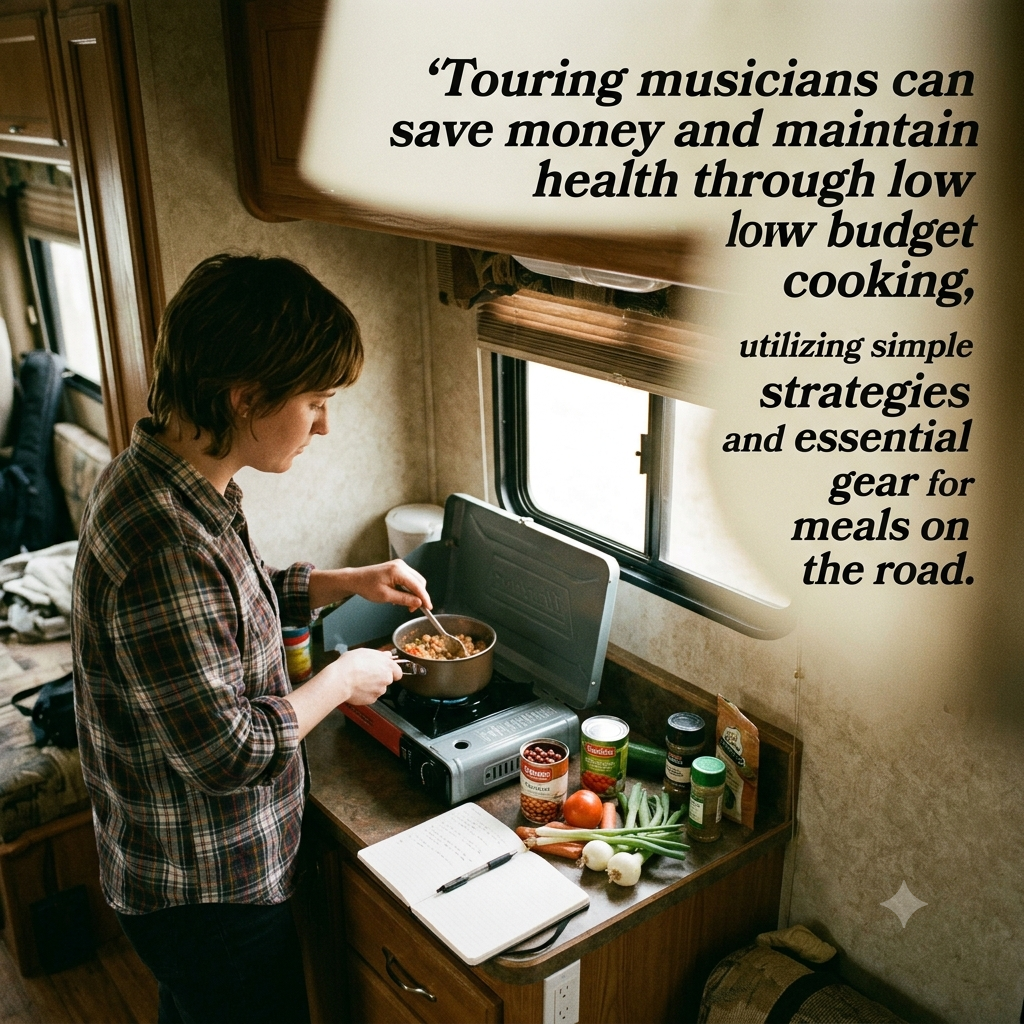
You don’t need a full kitchen to make incredible meals on the road. The secret to effective low budget cooking is having a compact, reliable gear setup that can withstand the vibrations of a moving vehicle. My personal setup has evolved over the years, but I always keep it stripped down to the absolute necessities to save space.
The Trusty Portable Stove
A single-burner butane or propane camp stove is your best friend. They are cheap, the fuel is easy to find at most big-box stores, and they provide instant, controllable heat. Whether you are boiling water for pasta outside a dirty green room or searing some chicken at a campsite, this stove is the workhorse of your low budget cooking arsenal. Always pack extra fuel, because running out mid-meal is a touring tragedy.
The Multi-Cooker Magic
If you have a vehicle with a power inverter or frequent access to motels, a small slow cooker is a game-changer. You can throw cheap cuts of meat and tough vegetables into it before soundcheck. By the time you finish your encore and load the trailer, you have a hot, incredibly tender meal waiting for you. This hands-off approach is top-tier nomad cooking.
7 Low Budget Cooking Strategies for the Road
Now that your mind and gear are right, let’s talk tactics. These seven strategies are the foundation of my touring diet. They will help you stretch every dollar while ensuring you actually look forward to your meals. Mastering these steps is the absolute core of successful low budget cooking.
1. Master the One-Pot Meal
Doing dishes in a parking lot is miserable, so minimizing your cookware is vital. One-pot meals are the holy grail of low budget cooking. Think hearty chilies, rice and bean bowls, or pasta dishes where you cook the noodles directly in the sauce. Less cleanup means you are far more likely to actually cook instead of giving up and ordering a pizza.
2. Stock Up on Non-Perishables
Your vehicle should always have a stash of emergency calories. I keep a dedicated bin filled with canned beans, crushed tomatoes, pasta, rice, and oatmeal. These dry and canned staples form the base of almost any low budget cooking recipe. Because they don’t require refrigeration, you never have to worry about them spoiling if your cooler ice melts during a long drive through the desert.
3. Repurpose Leftovers Creatively
Food waste is throwing money directly into the venue trash can. The best van life cooking recipes are designed to be repurposed the next day. If you make chicken and rice on Tuesday, turn the leftovers into a hearty chicken soup on Wednesday by adding a bouillon cube and water. Always think one meal ahead to maximize your grocery budget.
4. Shop Smart at Local Grocers
Avoid buying food at truck stops and gas stations at all costs. The markups are absolutely brutal. Instead, make a habit of routing your drives past budget grocery stores like ALDI or local produce markets. This single habit is the financial backbone of low budget cooking. You can buy a week’s worth of fresh ingredients for the price of two sad truck stop dinners.
💡 Touring Tip: Don’t let your fresh ingredients spoil. Check out our touring cooler packing guide to master the art of prioritizing cooler organization and ice management.
5. Prep Ingredients Before the Drive
Trying to chop onions on a makeshift cutting board while your bass player hits every pothole on the interstate is a recipe for disaster. Do your prep work when you are stationary. If you have a motel room for the night, use that clean, flat table to chop your veggies and portion your meats for the next three days of meals.
6. Utilize Dedicated Van Life Cooking Recipes
Don’t try to reinvent the wheel out there. There is a massive online community of travelers who have already perfected the art of mobile eating. Search out specific van life cooking recipes that match your gear setup. These recipes are explicitly designed for low water usage, minimal ingredients, and tight storage spaces, making them absolutely perfect for touring musicians.
7. Keep Flavor Packets Handy
Eating cheap doesn’t mean eating bland. Start a dedicated ziplock bag for flavor packets. Grab extra hot sauce, soy sauce, mayonnaise, and salt packets whenever you are forced to hit a fast-food joint. Those little packets take up zero space and can completely resurrect a bland bowl of rice, saving your low budget cooking meal from being a total drag.
Real-World Low Budget Cooking Challenges
Let’s not romanticize the process too much—cooking on the road is difficult. Weather is a huge factor. Trying to boil water on a camp stove while the wind is howling across a venue parking lot will test your patience. The reality of low budget cooking is that you must be resilient and adaptable. If the wind is too strong, that’s the night you rely on peanut butter sandwiches.
Another massive challenge is safe food storage. Keeping perishable items cold in a cooler requires constant vigilance. You have to drain the water daily and replenish the ice to maintain safe temperatures. If you fail, you risk food poisoning, which will absolutely ruin a tour. Successful low budget cooking means being meticulously organized about your cooler packing and temperature monitoring by following established authorities like the FDA safe food storage and temperature guidelines.
A Simple 3-Day Meal Plan
To show you how easy this can be, here is a quick reference table outlining a typical three-day meal plan that averages out to just a few dollars a day.
| Day | Breakfast | Lunch | Dinner |
| Day 1 | Instant oatmeal with peanut butter | Tuna salad wraps with spinach | One-pot black bean and corn chili |
| Day 2 | Scrambled eggs (camp stove) | Leftover black bean chili | Pasta with canned crushed tomatoes |
| Day 3 | Apples and protein bars | Cold pasta salad (from dinner) | Rice and canned chicken with soy sauce |
Staying alert behind the wheel is just as important as staying fed. Read our guide on overnight drive survival tips to learn how to manage fatigue safely on tour.
Road Note: Always keep a dedicated spray bottle with a 50/50 mix of water and white vinegar. It is incredibly cheap, safe to use on eating surfaces, and by far the easiest way to clean your cooking gear when you don’t have access to a sink. If you need additional support keeping your health on track while on the road, be sure to check out the MusiCares touring health and wellness resources.
Conclusion: Keep Your Tank Full and Expenses Low
Life on the road is unpredictable, exhausting, and incredibly rewarding. By taking control of your diet, you remove a major source of stress from your touring life. Low budget cooking is about more than just saving money; it is about self-reliance. It is about knowing that no matter where the gig is, or how much it pays, you have the skills to feed yourself and your crew.
I hope these strategies help you on your next regional run. It takes a little extra effort to skip the drive-thru and fire up the camp stove, but your wallet and your waistline will thank you. Keep practicing your low budget cooking, stay safe out there on the highway, and I will see you at the next digital truck stop right here at Little Robert’s Roadhouse.
Focus Keyword: low budget cooking
Tags: #LowBudgetCooking, #VanLifeCookingRecipes, #TouringMusician, #OnTheRoad, #BandLife, #CheapMeals, #HealthyEating, #NomadCooking, #GigEconomy, #LittleRobertsRoadhouse
Loved this guide?
If these road-tested cooking strategies helped you plan your next tour budget, please like this post, share it with your bandmates, and subscribe to the rlfleming.com blog for more survival tips from the highway!
...Share your thoughts